

By Maxwell Kumoye 9.10.2026
A group, the Unapologetic Masses Advocacy Movement has called on the National Sports Commission (NSC) chairman Shehu Dikko to explain to Nigerians why critical stadium facilities in the country are in a bad shape despite the billions allocated to facilities and sports development.
In a document titled “Talk Is Cheap: Reminder of Your Pronouncements from League to Federation to NSC,” dated October 8, 2026, the group, led by Ebbyzymore Inmohtap Numa, challenged Dikko to provide evidence of progress on commitments made during his years in sports administration.
The group’s concerns include the proposed 2026 N203.6 billion sports budget for 2026, particularly N18.775 billion for the first phase of rehabilitation of the Moshood Abiola National Stadium’s main bowl in Abuja and N5.8 billion for a High-Performance Centre at the complex.
It demanded details of the projects, including contractors, implementation timelines and long-term maintenance plans.
Numa also questioned the impact of Dikko’s tenure as chairman of the League Management Company (LMC) from 2013 to 2022, recalling his ambition to transform the Nigeria Premier Football League (NPFL) into a commercially viable competition.
The group cited persistent concerns over broadcasting, club finances, players’ welfare and commercial development, while demanding explanations for the failure of the Next TV broadcasting initiative unveiled in 2019.
It argued that progress should be measured through tangible improvements in revenue generation, match coverage and the financial stability of clubs.
The advocacy group also questioned the pace of stadium rehabilitation under the NSC, demanding updates on the Abuja stadium pitch, the proposed construction of 100 mini-stadiums and plans for six major stadiums across Nigeria’s geopolitical zones.
It raised concerns about the recurring deterioration of public sporting facilities, arguing that rehabilitation projects would have limited impact without sustainable maintenance funding.
The group further questioned the outcome of the Dangote Group-supported Adopt-A-Pitch initiative at the Abuja stadium, calling for audited accounts, details of the work completed and explanations for the reported failure to achieve lasting results.
Its claims concerning project outcomes and stadium certification require independent verification.
Numa urged the NSC to assess locally developed pitch technologies associated with Monimichele Sports Facilities Construction Company, citing facilities including Remo Stars Stadium and Samson Siasia Stadium.
The group proposed pilot projects in Abuja and Bayelsa, alongside an independent comparison of construction costs, durability, playing quality and long-term maintenance requirements.
It maintained that Nigeria should prioritise cost-effective solutions and local expertise rather than repeatedly committing public funds to expensive rehabilitation projects.
The advocacy group called for the publication of project contracts and expenditure records, a dedicated stadium maintenance fund and transparent reporting on infrastructure spending.
It also questioned how the NSC intends to finance its proposed stadiums, community sports centres and other facilities while existing infrastructure continues to face maintenance challenges.
The group argued that stadiums should be developed into commercially viable facilities capable of generating revenue through hotels, retail outlets, conferences and other activities.
It stressed that the success of Nigeria’s sports infrastructure programme should be measured not by budget allocations or project announcements, but by the delivery of functional facilities that remain operational.
The NSC’s response and relevant project records would be needed to establish the status of the commitments and address the questions raised.
The challenge for Dikko is to demonstrate that the commission’s ambitious spending plans will translate into lasting improvements for Nigerian athletes, clubs and sports communities.
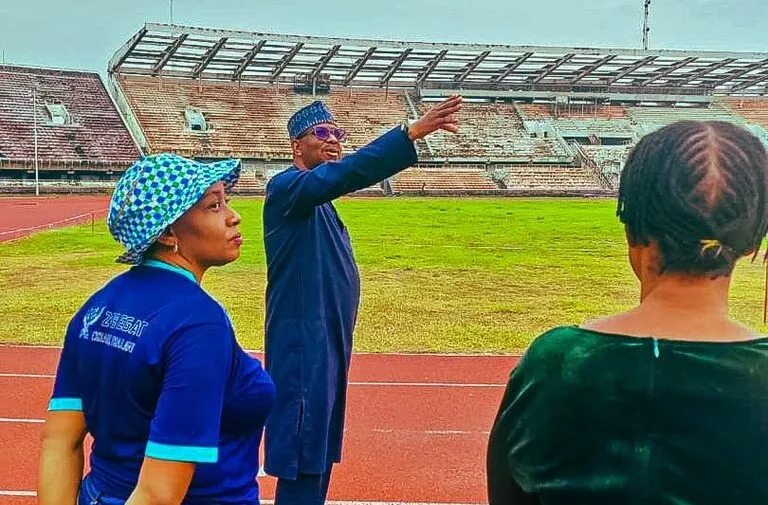 NSC boss Shehu Dikko... at the National Stadium Lagos.