

21.10.2026
Alberta, Canada’s “oil-rich province,” has chosen to strengthen its position within the federation rather than pursue secession.
A referendum held on October 19 (local time) overwhelmingly favored remaining part of Canada. However, while the vote confirmed national unity amid U.S. trade pressures and threats of annexation, analysts note that conflicts with the federal government over resource development and regional autonomy remain unresolved.
According to the Alberta Election Commission’s preliminary count on October 20, 75.24% of 1.9398 million valid votes supported staying in Canada, while 24.76% backed initiating legal procedures for a future binding independence referendum. The vote did not directly address independence but rather whether to begin the process for a future referendum.
Mark Carney, Canada’s prime minister, responded to the referendum’s rejection by stating, “Alberta residents made a clear choice—they chose unity, chose to build together, and chose to care for one another.” Premier Danny Smith of Alberta similarly remarked, “Residents selected a stronger Alberta within a united Canada.” While the federal government emphasized national cohesion, the provincial government highlighted regional empowerment.
Alberta is Canada’s key oil-producing region and a conservative political stronghold. Resentment toward federal environmental and energy regulations, perceived as stifling the province’s wealth-generating industries, runs deep. Dustin Degenhart, an Alberta resident, told the AP, “Alberta has been treated like a colony—they keep taking from us but give nothing back.” The result demonstrates that such grievances do not equate to broad support for secession. Still, it also cannot be interpreted as universal agreement with Ottawa’s policies. AP
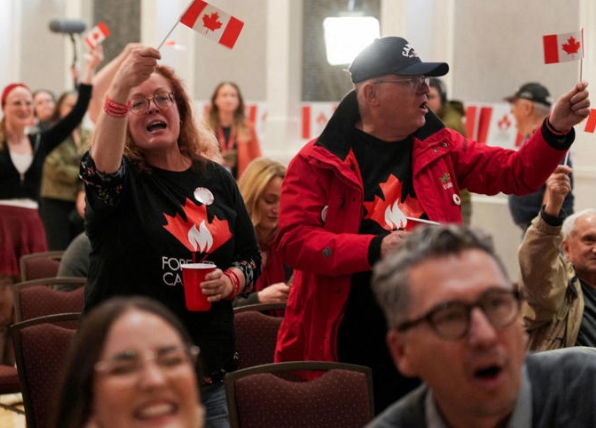 Alberta citizens...vote to stay with Canada.