

7.8.2026
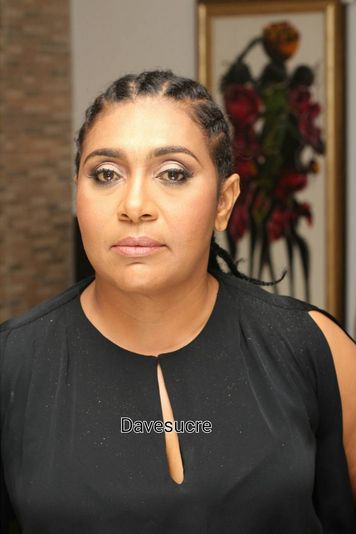
Nollywood actress and social activist, Hilda Dokubo, has accused the Nigerian political elite of heartlessly padding the national and state budgets while many Nigerians are languishing in poverty and lack of amenities.
Dokubo, who was speaking in video posted online said N6.9 trillion was padded into the budget under the guide of unsubstantiated and questionable projects.
She noted that politicians should search their conscience at a time millions of citizens are struggling to afford food and other basic necessities.
She gave an example of an alleged N393 billion allocation for 1,477 streetlights.
Dokubo asked why a single streetlight would allegedly cost about N266 million, sarcastically wondering whether the poles were “going to heaven.”
She also questioned an alleged N1.14 billion allocation for 538 bulbs, asking what could possibly justify such expenditure.
Turning to water infrastructure, the actress expressed disbelief over an alleged N114 billion allocation for 538 boreholes, contrasting the figure with the reality of communities where residents still rely on unsafe water sources.
“What kind of boreholes will cost this amount?” she asked, mocking the apparent scale of the allocation.
Dokubo recalled growing up in Port Harcourt when residents could turn on their taps and expect water to flow, lamenting that Nigerians are now being told to depend on boreholes despite enormous public expenditure on water projects.
She equally questioned an alleged N505 billion allocation for 2,122 ICT projects, describing the figures as another example of spending that demands public scrutiny.
The actress further criticised an alleged N6.7 billion allocation for the empowerment of traditional rulers, asking whether such expenditure would genuinely improve the lives of Nigerians or simply strengthen political patronage.
She challenged government officials to explain why billions could be allocated to questionable projects while young Nigerians and women continue to face severe economic hardship.
Dokubo said the alleged spending pattern reflected a deeper crisis of governance, accusing the political class of treating public resources as though they belonged to a privileged few.
“What kind of government sits at a table of power, dips its filthy hands into the treasury and serves itself a banquet of billions while millions of Nigerians can’t afford a meal, a roof or clean water?” she asked.
She warned that Nigerians could no longer afford to remain passive in the face of alleged corruption and waste.
According to her, the country belongs to more than 200 million Nigerians, while those occupying public offices represent only a tiny fraction of the population.
She questioned how such a small group could continue to exercise enormous control over national resources while the majority remained spectators.
Dokubo also condemned what she described as the changing social attitude towards corruption, arguing that people accused of stealing public resources are increasingly celebrated, honoured and given prominent positions.
She said African societies traditionally condemned thieves publicly, insisting that modern Nigeria must recover a similar culture of accountability—without resorting to unlawful punishment or vigilantism.
Painting a picture of the consequences of poor governance, Dokubo asked Nigerians to imagine a farmer without access to clean water, a mother whose child suffers from waterborne disease and a business owner struggling with darkness and insecurity.
She argued that government should prioritise projects that directly improve citizens’ lives rather than schemes whose costs and usefulness raise questions.
“This is not governance,” she said. “This is betrayal.”
Dokubo urged Nigerians to reject ethnic and religious divisions and unite in demanding transparency from those entrusted with public resources.
“We may be acting helpless, but we cannot be helpless, and we are not helpless,” she declared.
She called for every naira of public money to be accounted for and urged citizens to use peaceful and lawful civic action to demand explanations from public officials.
Her message ended with a blunt warning to the political establishment: Nigerians, she said, must stop swallowing what she described as unacceptable governance and begin demanding accountability.
“The time for action is now,” she declared. With Guardian reports